



Marta Cubells
Joana Claverol
Institut de Recerca Sant Joan de Déu
SJD Barcelona Children’s Hospital
linical trials have never been more scientifically sophisticated than they are today. But many studies continue to face familiar challenges: slow recruitment, high dropout rates, protocol deviations, the informed consent decision-making process, operational burden on sites, etc. These challenges are particularly evident in complex studies such as gene or cell therapy studies that also entail long-term follow-up periods.
Why Clinical Trials Still Fail Patients
Protocols are designed to answer scientific questions; they are often not designed around the realities of patients’ lives and their specific needs.
A protocol may appear feasible on paper but becomes difficult to execute once real patients, caregivers, investigators, clinicians, nurses, and study coordinators interact with it. The result can be a gap between the way a trial is imagined during the design phase and the way it is actually executed in clinical practice. This gap has implications not only for patient experience, but also for recruitment, retention, protocol compliance, data quality, and study timelines.
SJD Barcelona Children’s Hospital designed and implemented an integrated End-to-End Patient-Centric Trial Design Method in several commercial and academic studies to address these challenges before the studies were initiated.
End-to-End Patient-Centric Trial Design Method
This methodology combines patient engagement, clinical expertise, operational feasibility assessment, human-centered design, and simulation-based testing throughout the development lifecycle of a clinical trial.
Rather than evaluating a protocol only once, this method is based on a 360-degree analysis of the study protocol and the entire participant journey from initial contact through informed consent, study participation, long-term follow-up, and study closure. The model integrates three complementary phases/approaches:
- Clinical Trials Expert Panel input
- SIMTest High-Realistic Clinical Simulations
- Patient and Caregiver Advisory Panel input
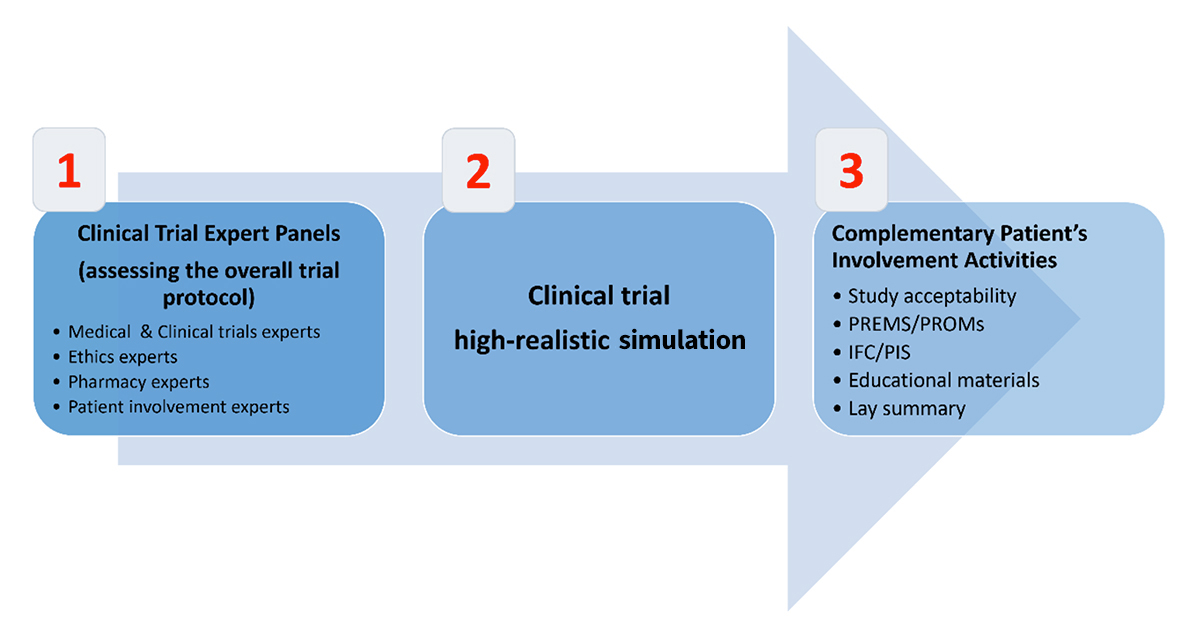
This approach goes beyond the simple combination of three individual phases by actively integrating them into a coherent framework. For example, risks identified or recommendations proposed by experts can be further explored and validated through simulation. Similarly, findings arising from these simulations can be translated into topics for discussion within the patient panel, where they can be examined from a broader and more diverse collective perspective.
Study Protocol Assessment by Clinical Experts
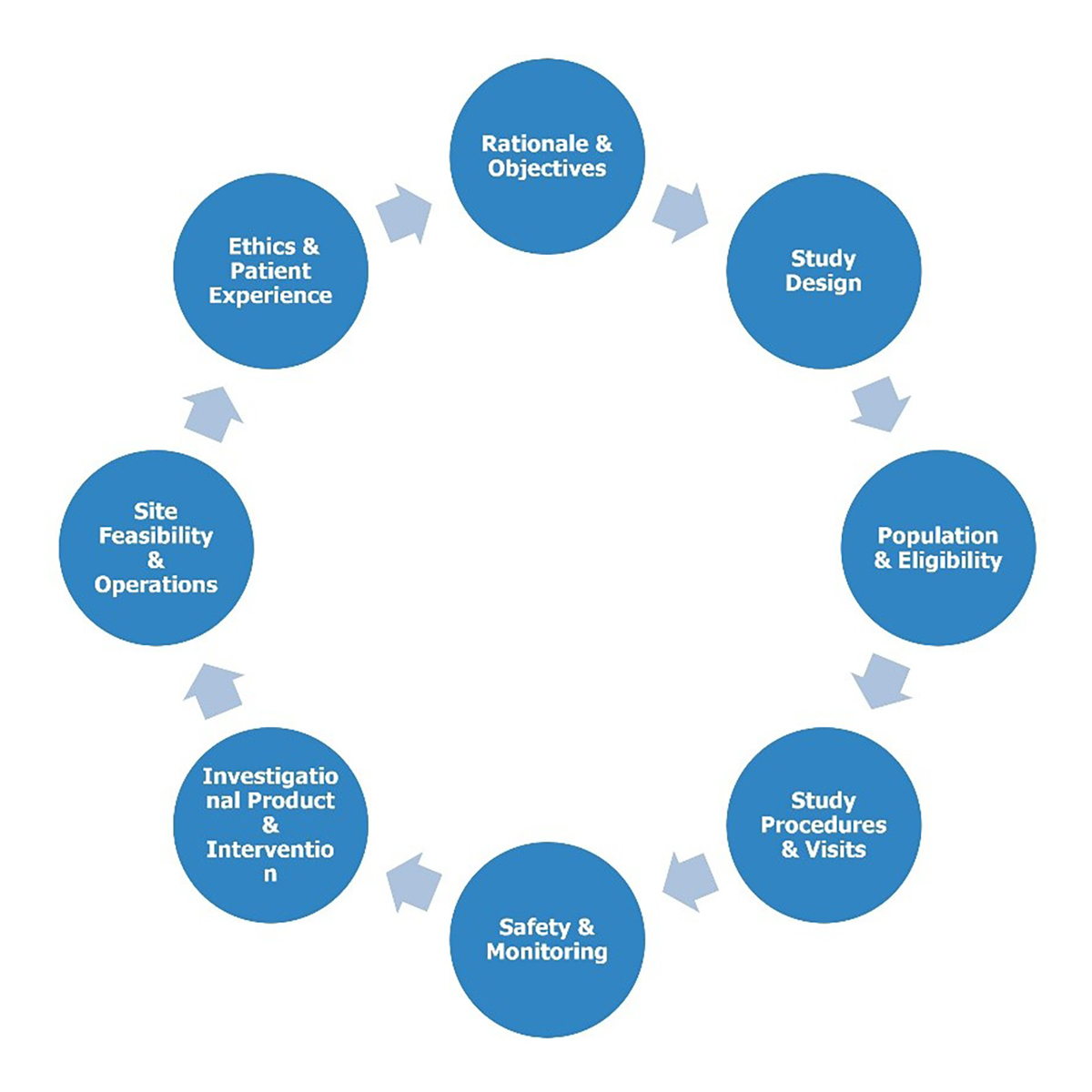
In this phase, the Clinical Trials Experts Panel evaluates clinical trial protocols across eight key domains (see Figure 2) that collectively influence trial feasibility, acceptability, and participant experience. The review begins with an assessment of the study rationale and objectives, followed by the study design, target population and eligibility criteria, study procedures and visits, safety monitoring requirements, investigational product and intervention characteristics, site feasibility and operational considerations, ethical aspects, and patient experience. Recommendations generated by the panel aim to optimize protocol feasibility, participant recruitment and retention, and the overall patient experience while maintaining the scientific objectives of the study.
Testing Reality Before the First Participant Is Enrolled
One of the model’s most distinctive components is the use of SIMTest, a methodology based on highly realistic clinical simulation. Professionals and patients simulate complete study visits and/or specific trial procedures in a realistic setting, generating both operational and experiential insights that are particularly meaningful because they are derived from an immersive experience.
Rather than relying solely on theoretical assessments, simulation allows sponsors and stakeholders to observe how a protocol performs in conditions that closely resemble real clinical practice. The methodology is based on the principle that there is often a difference between “work-as-imagined” and “work-as-done.” By recreating real-world circumstances, teams can identify operational bottlenecks, communication failures, cognitive overload, and workflow inefficiencies before study launch.
Beyond operational and logistic aspects, a highly realistic simulation conducted by our team also identified opportunities to improve communication strategies, use educational materials more consistently, simplify explanations of complex concepts, and distribute information across multiple interactions rather than concentrating everything into a single visit.
Listening to Patients Beyond Recruitment
Patient input is often included late in development, frequently after major protocol decisions have already been made.
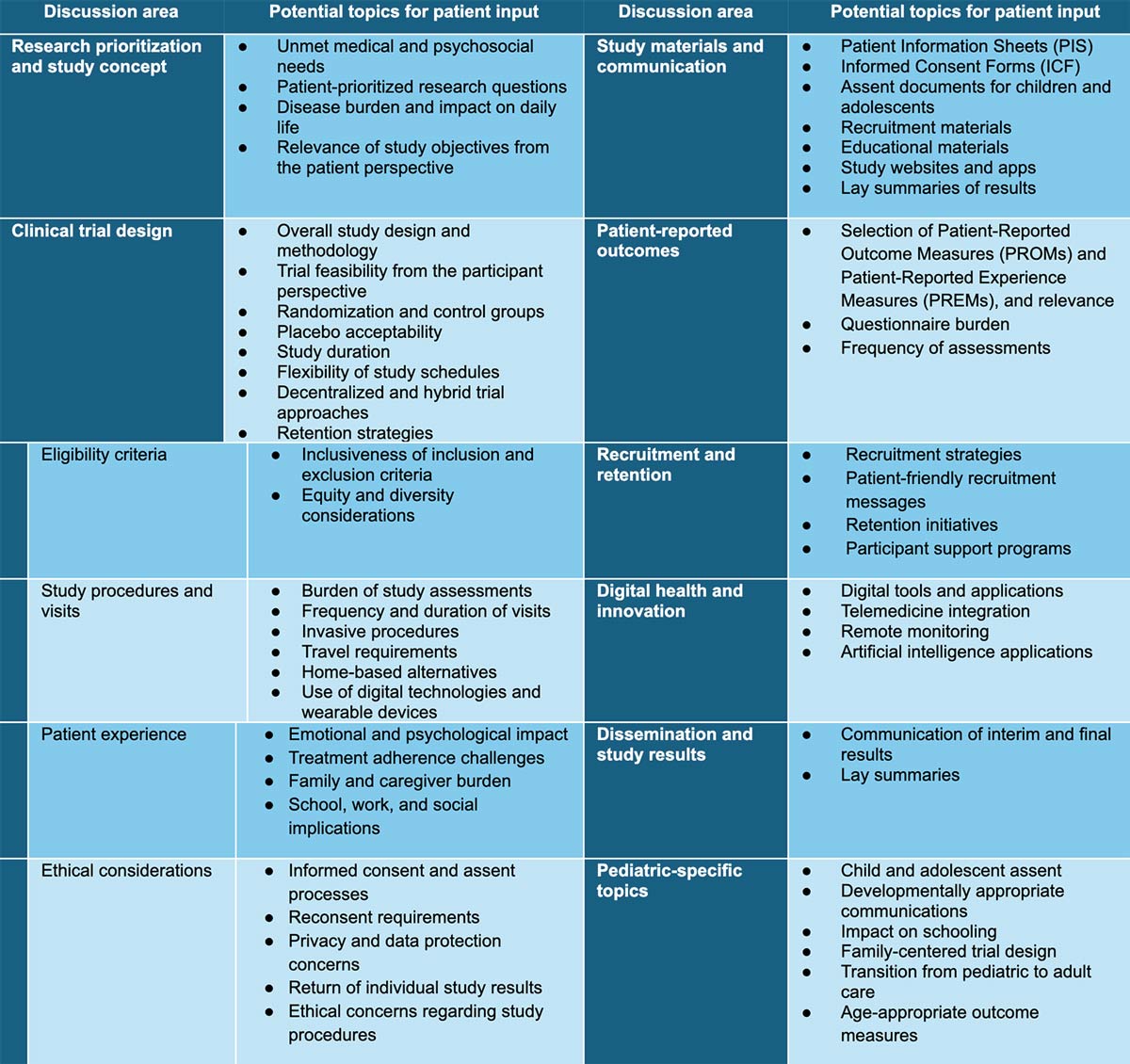
This end-to-end patient-centric design method places patients at the center of protocol evaluation. Patient advisory panels review the study design feasibility and clinical trial documentation from the perspective of real users, assessing comprehension, terminology, risk communication, participant burden, decision-making requirements, accessibility, and overall experience (see below). They also work on the same topics covered by the simulation, with the goal to gather wider feedback about previously identified challenges and potential solutions.
Patient Involvement as Strategy
Patient-centricity is often discussed as a value. It must also be viewed as a development strategy: Studies that align scientific goals with participant needs, concerns, and constraints are more likely to achieve efficient recruitment, reduce dropout rates, improve adherence, support informed decision-making, and generate higher-quality data.
The SJD experience consistently showed that many protocol challenges are identifiable long before first-patient-in. Communication difficulties, burdensome schedules, unrealistic assumptions about participant behavior, workflow inefficiencies, and comprehension barriers can all be detected through structured patient involvement and simulation methodologies.
Most importantly, these challenges can often be addressed without compromising scientific rigor (e.g., by adjusting the time duration of the visits, including decentralized elements, ensuring the suitability of PROMs, etc.).
The future of patient-centered research requires moving from consultation to codesign. Sponsors, academic institutions, investigators, regulators, patient organizations, and healthcare systems should work together to test, refine, and optimize clinical trial experiences before implementation.
An End-to-End Patient-Centric Trial Design Method approach provides a practical framework for achieving this goal. By integrating patient insight, clinical expertise, operational assessment, and simulation-based validation, organizations can build trials that are not only scientifically robust, but also understandable, feasible, and meaningful for the people who ultimately make research possible: patients.