



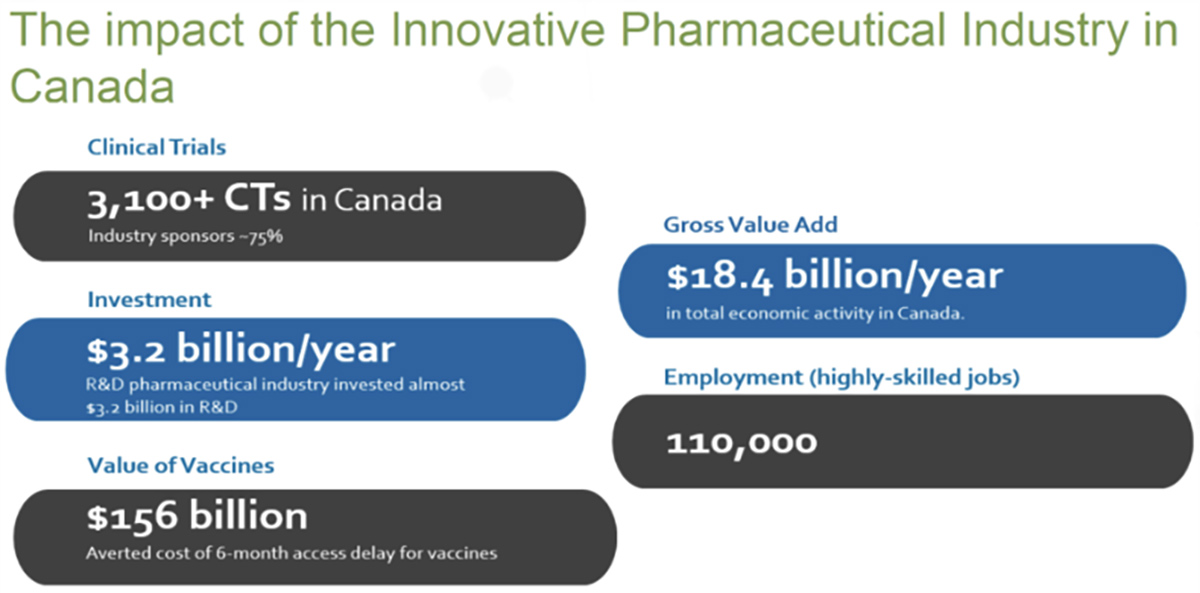
anada is entering a defining moment in its life sciences evolution, where scientific innovation, regulatory modernization, and global collaboration are converging with unusual clarity. From AI-enabled drug development to decentralized clinical trial models and advancing biomanufacturing, innovation is not only present in Canada; it is accelerating (Figure 1). At the center of this momentum is Health Canada, whose regulatory agility has become a quiet but powerful catalyst for progress.
Regulatory Modernization as an Enabler of Innovation and Access
Health Canada’s early efforts to engage stakeholders and modernize regulatory systems have evolved into a more agile, responsive framework that supports both innovation and patient access.
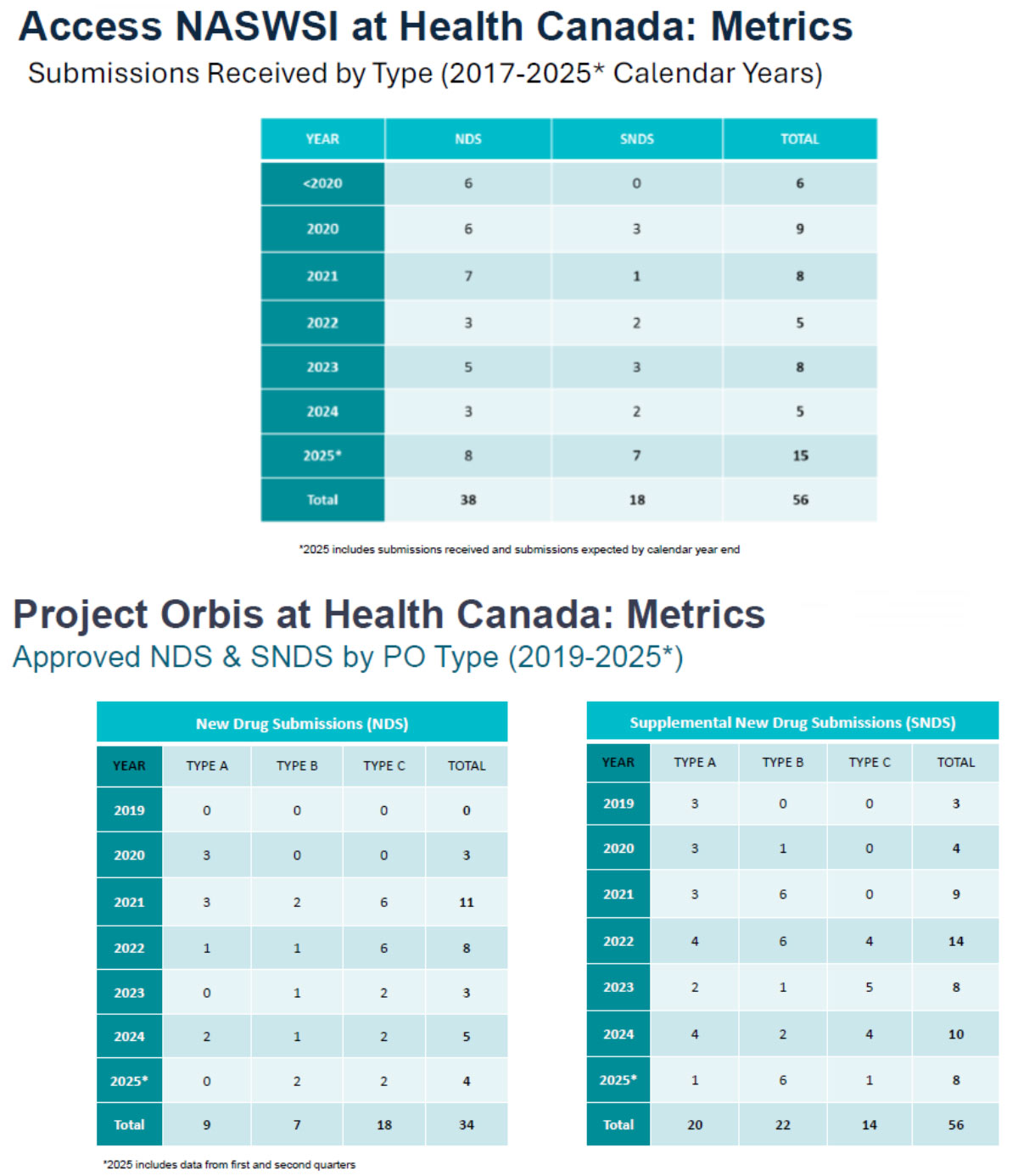
With the increasing number and complexity of drug submissions and limited resources, midsized health authorities must constantly adapt to continue regulating timely access to safe and effective drugs. One way Health Canada has remained agile is by engaging in multiple modes of exchange with global partners, including discussion forums, information sharing, collaboration, work-sharing, recognition, and mutual recognition agreements. Initiatives such as Project Orbis and the Access Consortium, and partnerships with regulators including the FDA (US), EMA (EU), and MHRA (UK), demonstrate a commitment to global alignment while maintaining scientific and regulatory independence.
Health Canada’s presence in these and other information-sharing and harmonization initiatives have fostered global alignment, enhanced regulatory decision-making, and ultimately supported timely access to drug products that meet Health Canada standards for safety, efficacy, and quality (Figure 2). From 2019 to the end of 2024, Health Canada has approved 30 new drugs and 47 new indications through Project Orbis that have also reduced the gap between FDA and Health Canada approvals to 126 days. The regulator continues to explore opportunities for collaborations and remains open to engaging with stakeholders for solution-driven approaches.
Clinical Innovation: Designing Trials for Today and Tomorrow
Clinical trial innovation in Canada is accelerating, driven by a shift toward patient-centric design and more flexible, technology-enabled approaches.
Modern clinical trials in Canada increasingly emphasize adaptivity as a core component of patient-centric research, enabling studies to better meet participants through flexible, fit-for-purpose designs. Understanding adherence and retention risks, especially among underserved demographics, allows sponsors to tailor decentralized clinical trials and support that improves engagement and reduces dropout. Real-time behavioral information, supported by digital and artificial intelligence (AI)-enabled tools (more about this below), is allowing earlier protocol refinements and adaptive interventions before issues escalate. Alongside these technologies, humanized experiences remain essential: Conversational, agentic interfaces and human ambassadors can provide empathy, motivation, and continuity for participants who need more personalized support. Together, these adaptive and human-centered strategies reflect a modernized clinical research model that enhances inclusivity, strengthens retention, and elevates the overall participant experience.
At the same time, sustaining this evolution requires investment in workforce readiness and infrastructure. As trials become more distributed and technology-driven, organizations must ensure interoperability, training, and site-level readiness to effectively implement new methods. These foundational elements will be critical to maintaining momentum in clinical innovation.
Advancing Pharmacovigilance and Safety Through Collaboration and Transparency
Health Canada is internationally recognized as a top-tier regulator, reinforced by its designation as a WHO Listed Authority (WLA), recognition which reflects the highest global regulatory standards.
Canada’s pharmacovigilance ecosystem is evolving through strengthened collaboration, transparent data sharing, and the integration of modern safety tools, enabling faster signal detection and more coordinated responses across regulators, industry, and healthcare partners. Through the Uppsala Monitoring Centre’s VigiLyze, Canadian safety signals are contextualized within the WHO’s VigiBase, which contains over 40 million standardized reports. This global perspective strengthens signal detection and supports more informed regulatory decision-making.
Transparency is further supported by the Canada Vigilance (CV) Adverse Reaction Online Database, which provides de-identified post-market safety reports through searchable outputs and ASCII extracts. As of May 2025, more than 1.19 million reports were available. A persistent challenge, however, has been duplicate reporting driven by multisource submissions, carbon copies, and rereporting by multiple marketing authorization holders (MAHs). These duplicates can distort signal detection and divert resources from more meaningful safety assessments.
Recent efforts, including Operation Glasswing, aim to improve usability and reduce unnecessary burden. In February 2026, for example, Health Canada issued a clarification to section 4.3 of the Reporting Adverse Reactions to Marketed Health Products guidance, removing the requirement for MAHs to scan the CV database and resubmit previously reported cases. Health Canada acknowledged that the former approach contributed to significant duplication and unnecessary burden. Additional Health Canada efforts to enhance data accessibility and usability, including improved search functionality and expanded data fields where appropriate, have the potential to further strengthen signal quality and regulatory efficiency in these systems.
Artificial Intelligence as a Cross-Cutting Enabler
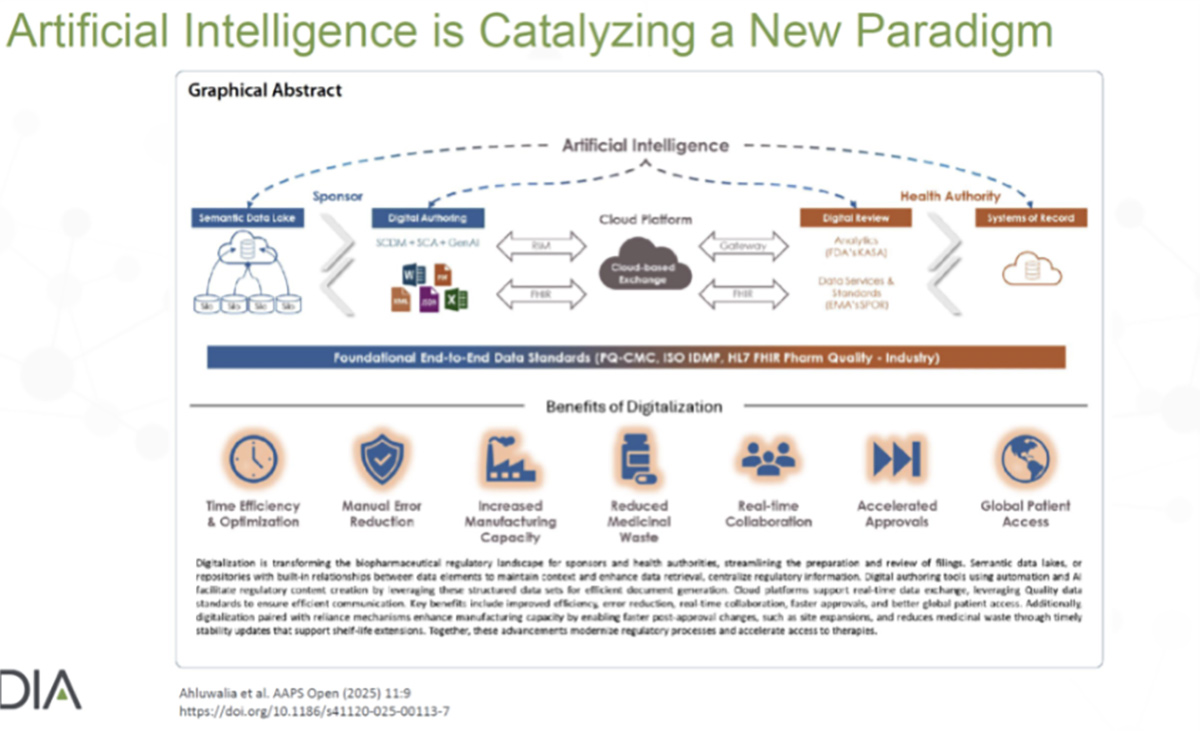
AI is increasingly being explored in clinical development, regulatory work, and pharmacovigilance as a means to improve efficiency and support more informed decision-making in Canada (Figure 3). AI-driven solutions can support protocol development through targeted and expedited literature review, structured authoring, and data-based recommendations based on historical trial data. These tools have the potential to reduce repetitive tasks and improve the efficiency of study design.
AI is also being explored as an assistant in identifying patterns across large data sets, including data from medical devices and adverse event reports, with the goal of supporting earlier detection of safety signals in pharmacovigilance. Similarly, in regulatory contexts, AI may help reduce the burden of repetitive processes and improve operational efficiency. These tools are intended not to replace but to augment human expertise, enabling professionals to focus more on high-value scientific and strategic work.
Looking Ahead: What This Means for Developers and Partners
Canada’s trajectory in the life sciences is increasingly defined by the convergence of regulatory modernization, clinical innovation, and globally connected safety systems. What is emerging is not only a more efficient environment, but a more adaptive and data-driven ecosystem, supported by the integration of AI across the product lifecycle.
For developers and partners, this signals a shift in how Canada should be viewed: not simply as a market for entry, but as a strategic environment for co-development, evidence generation, and regulatory engagement. Their success will depend on the ability to operate within globally interconnected frameworks, leverage data efficiently, and keep patients at the center of clinical trial design.
In a world where speed, quality, and regulatory alignment shape competitive advantage, Canada is increasingly positioning to become a strategic destination not just for conducting research but for shaping the future of healthcare innovation.